

Dame Cicely Saunders: A Brother’s Story
The story of Dame Cicely Saunders as told by her brother Christopher
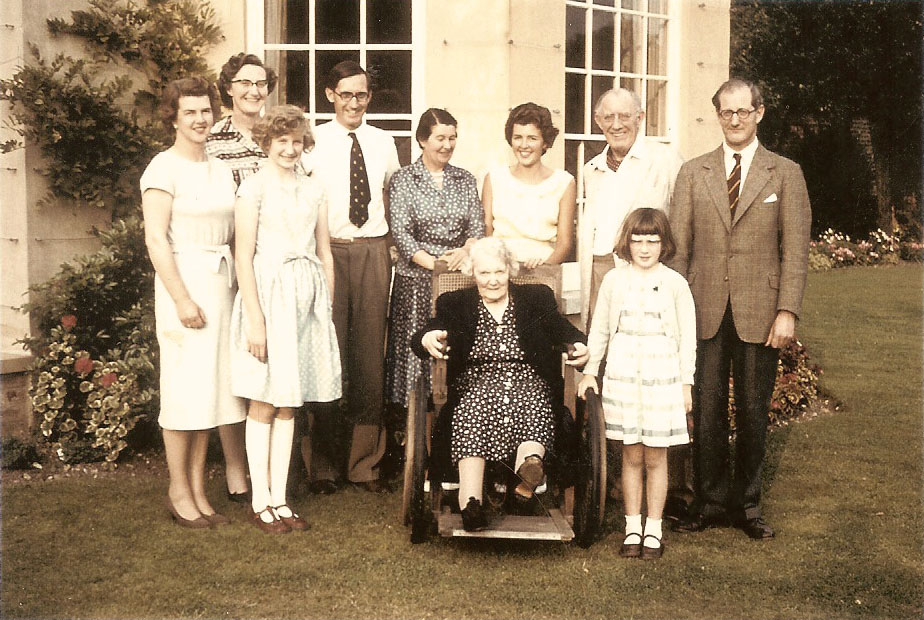
M
y sister Cicely (Dame Cicely Saunders OM, FRCP, MA, SRN) was the pioneer of Hospice care and put it on the map. My sister Cicely (Dame Cicely Saunders OM, FRCP, MA, SRN) was the pioneer of Hospice care and put it on the map.
What has come to be known as the Hospice Movement was initiated and led for over 40 years by Cicely with tremendous drive and determination. She had successively qualified as a nurse, as a lady almoner, and as a doctor and got an Oxford degree in social sciences (PPE). She came a long way from being a six foot tall, shy, very intelligent girl, feeling a bit of an outsider, to be one of the very remarkable people who have changed the care of the terminally ill. Happily her work, and that of many others who took up her challenges, was recognised in her lifetime, with Royal honours and 22 Honorary Doctorates – she said if she couldn’t sleep she counted those degrees, not sheep!
Besides Cicely we should remember a remarkable series of women, some of whom preceded her, and others who joined in the work with her later on. From Sister Mary Aitkenhead of Dublin, Dean Florence Wald of the Yale University Nursing School in Newhaven, Connecticut, USA, to Louie of Hackney, one of Cicely’s favourite and surprisingly long-lived patients at St Joseph’s, and now, fortunately for us, there are legions of such great people around the world.
The Early Years
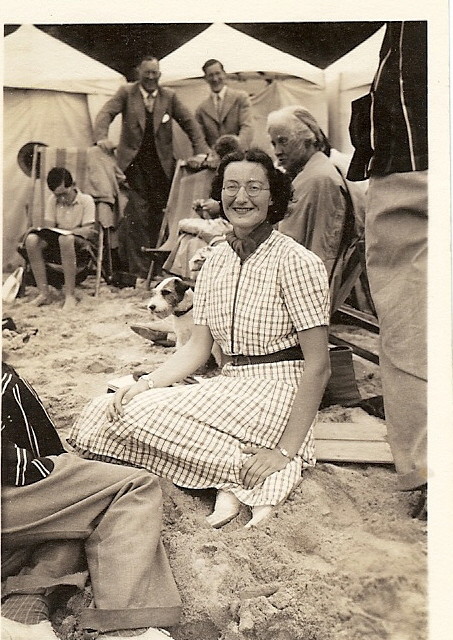
Why did Cicely become so motivated, determined and effective in realising her vision of the right care for dying patients? Cicely’s background and education are part of the explanation. Our family were prosperous, because of our father, Gordon’s, brilliance as an estate agent. He was the seventeenth child of John Henry Saunders, who in the middle of the nineteenth century realised that photography was a rapidly developing business opportunity. He set up photographic studios, in Eton, Windsor, Oxford, Cambridge and Harrow, and also Camberley for Sandhurst. A great entrepreneur! John Henry died at 56 when my father was one.
As number seventeen child with a widowed mother, my father’s education was limited. What profession could he enter with no money? In Surveying, you got a meagre wage right from the start, so he went for that. It helped that he was a very bright, handsome and ebullient young man, good at games. When qualified he was taken on by a respectable estate agency in London, John D Wood & Co. He made his mark, so was chosen as senior partner at only 28 when John D Wood retired. He proceeded to build the firm to the point when it was one of the top three in the country. Cicely inherited his energy and drive.
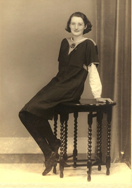
Cicely was born in 1918. At 13 she was sent to boarding school at Roedean, very cross that she had not been consulted about where she should go. There she did all right, but was a bit lonely. She was six feet tall, though never admitted to it, and very clever; a bit of an outsider and rather daunting, especially to eligible young men. In 1938, she went up to Oxford to read philosophy, politics and economics (PPE). In1939 we went to war, and Cicely went back to Oxford, but felt frustrated that she wasn’t doing anything useful. She was determined to go into nursing despite some family opposition. She applied to and got into the Nightingale School at St Thomas’s Hospital in London in 1940.
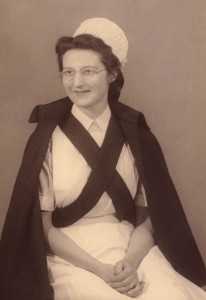
Cicely found that she really enjoyed nursing and her colleagues – known as members of a “Set”. They did sterling work through the bombing. Towards the end of her nursing training in early 1944, Cicely’s back started to be a big problem, and just as she qualified as SRN (State Registered Nurse), she was told she couldn’t go on nursing; if she did she would be in continual pain. So, very reluctantly, she left nursing.
She still wanted to be close to patients and she knew she could do that as a Lady Almoner, nowadays known as a medical social worker. So Cicely went back to Oxford in October 1944, to get a Diploma in public health, and to finish her PPE degree. She did all that in a year, getting a Distinction in Public Health – her exam technique evidently was still intact! Then she rejoined St Thomas’s in London for practical training as a lady almoner.
The derivation of the name Almoner is that the big London hospitals became wealthy charities, and had a long tradition of giving alms and helping their patients, not only with free treatment but also after they were discharged. So this became Cicely’s life.
Turning Point
She soon realised that she was seeing a number of patients who were in the hospitals which were designed to cure infectious disease or repair broken bones and so on, but which weren’t well equipped to deal with people who were in pain and dying slowly, with all sorts of non – medical worries, which Almoners helped them deal with.
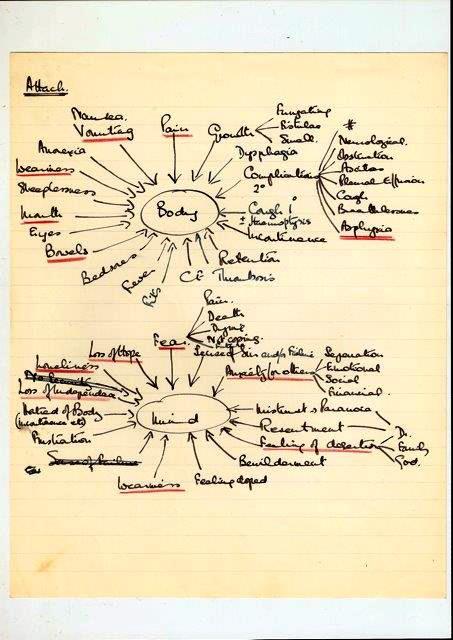
She became particularly attracted to one patient, David Tasma, a Polish waiter, about 40, who had escaped somehow from the Warsaw ghetto during the War, and ended up in London. He had terminal cancer and was feeling that his life had really been worthless. He had done nothing good, nothing worthwhile. So there he was, at the end. Cicely spent a lot of time with him, over a period of only about a month, and developed a very close relationship. She recognised that the pain he was suffering had in fact multiple components, one being that he had lost his family’s Jewish faith. Cicely discussed her own beliefs and life’s meaning with David, and thus helped him to return to the faith of his fathers. He and other patients showed her that if they could be helped with mind-soul aspiritual issues regardless of their faith if any, with family and other worries, not just their symptoms, then they usually settled and needed less pain control than if that was all that was being done. This was the germ of the idea that terminal patients needed to be cared for in a different way and reinforced the concept of Total Pain.
When working for Mr “Pasty” Barratt, a leading Harley Street surgeon, she started volunteering as a nurse at St Luke’s Hospice for the Dying Poor. There, she saw the benefits of really good and thoughtful nursing care plus good pain control, but also that there was a serious lack of professional medical help. This made her sure that care of the dying needed to be a lot better and was work that she could do.
Somewhere along the way as an almoner, she had had a ‘road to Damascus’ experience, being converted to evangelical Christianity within the Anglican Church. She felt that there was something she had to do, but she wasn’t quite clear about it. Because of her unusually wide experience as a nurse and now as an almoner, she was well equipped to make care for the terminally ill much better. She discussed this with Pasty Barratt, who said to her ‘Well, you’ve got good ideas, but you won’t get anywhere unless you become a doctor. It’s the doctors who desert the dying’.
Cicely being fired up with this advice, went back again to St Thomas’s and applied to the medical school. She hadn’t done the first degree, so they were hesitant. Pasty used his influence and they let her in at the age of 31, and she proceeded to complete her medical training, passing all exams first time.
When she was doing medical house jobs, she saw that pain control needed a lot of research, to provide evidence not just opinion. She applied for and received a research grant from The Sir Halley Stewart Memorial Trust so now she could start her work.
Vital Research on Pain Control

Copyright photograph by Derek Bayes
Having already known St Joseph’s Hospice in Hackney via work as an Almoner, she went there in 1958 to do her research into the control of pain. At St Josephs she knew a lot of practical nursing was going on, with limited help from busy GPs. There was a steady throughput of patients, many of whom had terminal cancer and had significant pain, and again, like in St Luke’s, the sisters were paying attention to Total Pain, although they hadn’t called it that. Cicely showed by trials with the Brompton Mixture on their patients that morphine addiction was not a problem, and persuaded them to use it. Cicely soon became in effect Honorary Medical Director at St Joseph’s.
As a doctor, Cicely knew that the medical profession was very reluctant to use morphine or heroin to control pain, although they were the best drugs for it, and only given by injection – not all that pleasant for patients. Because Doctors were scared of morphine addiction, they were loath to give regular amounts but waited until patients were virtually screaming for help. In her research on patients at St Joseph’s Hospice, she set about determining whether orally administered morphine or heroin were successfully controlling pain with little and often doses, and whether there was any risk of addiction. Indeed, if somebody was dying, does it really matter?
Cicely accumulated records of over 1,000 patients whilst she was at St Joseph’s. She took many photographs of patients, first as they arrived, anxious, with pain, generally exhausted from tough experiences in general hospitals. Photo’d again after a few days when pain was controlled, how different they were – they had become themselves again. She proved her case completely. She used her photos in lectures to great effect and eventual success….she never wrote up her thesis, though she was elected FRCP because of St Christopher’s success and her vast number of papers and other publications. All credit to the Royal College – her bronze bust is prominent there.
Planning for the First Modern Hospice
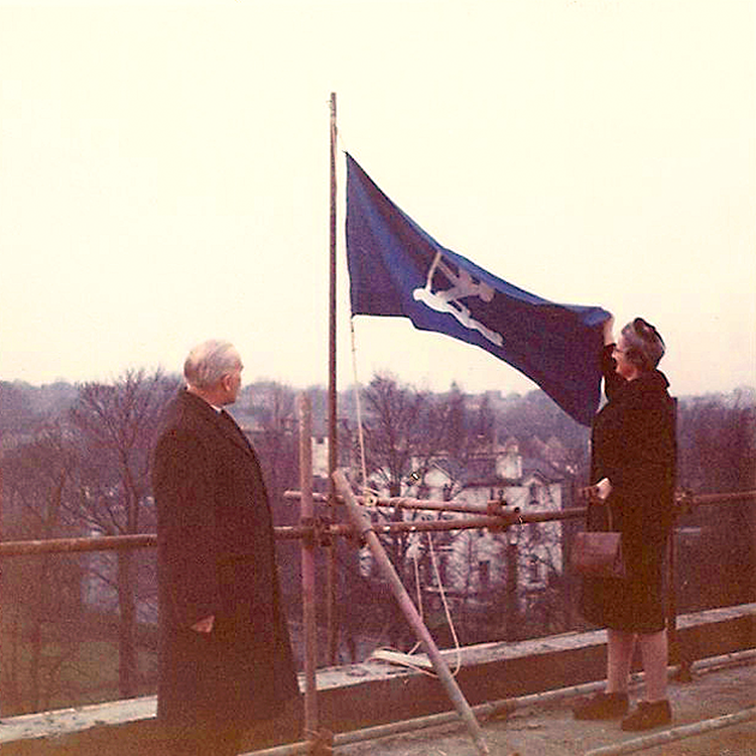
While she was doing research, Cicely began to gather together a group of like-minded professional friends, doctors, nurses and others, who knew about the problem. They were a vital advisory group to work out what was needed and how the need could be met practically. Some from her Medical course at St Thomas’s were in the group. They concluded that the answer was a dedicated hospital for the terminally ill, which should be called a hospice.
The name St Christopher’s Hospice was agreed after the Saint who carried the Christ child across the river. St Christopher’s Hospice would not only care for patients, but also do research and teach other professionals – nurses, doctors and others – to use elsewhere the improvements they made in the care of the dying. This academic approach with three components – care, research and teaching – would be a tremendous strength, distinguishing St Christopher’s from existing charitable hospices for the chronically sick.
One of the early questions I discussed with Cicely was if they were successful, how to spread the word? Would St Christopher’s be the head of a group of subsidiary or daughter houses, like the medieval monastic orders or not? The answer soon emerged – no, don’t organise it that way, that leads to bureaucracy and expense, and inflexibility – much better to give every possible aid and encouragement to people who wanted to start similar hospices elsewhere, but who would inevitably be confronted with quite different circumstances, different sources of finance and so on. So that was the answer – We will give you all the help we can – have a look at what we do, then come here to be trained, then send your staff here to be trained, take away what you need. We will keep in touch, tell you results from our research, and be available to help you.
Things developed well. Cicely found she had a talent for fund-raising, no doubt our father’s great abilities as a salesman turned into reverse, selling people on giving you money. She said “Once we had a plan I plundered the City charities, to buy the site and start building”.
Cicely came across work by people in different parts of the world, but particularly in the United States, on the problems of death and dying, control of pain and looking after terminally ill patients. In 1963 I had come across the Ella Lyman Cabot Trust of Boston USA, and introduced her. They gave her a grant to travel to the United States to meet a number of people who she had already identified as being involved in this field. She went on an eight week visit to the States. There she found that she was able to introduce people in America to others they did not know working on the same problems.
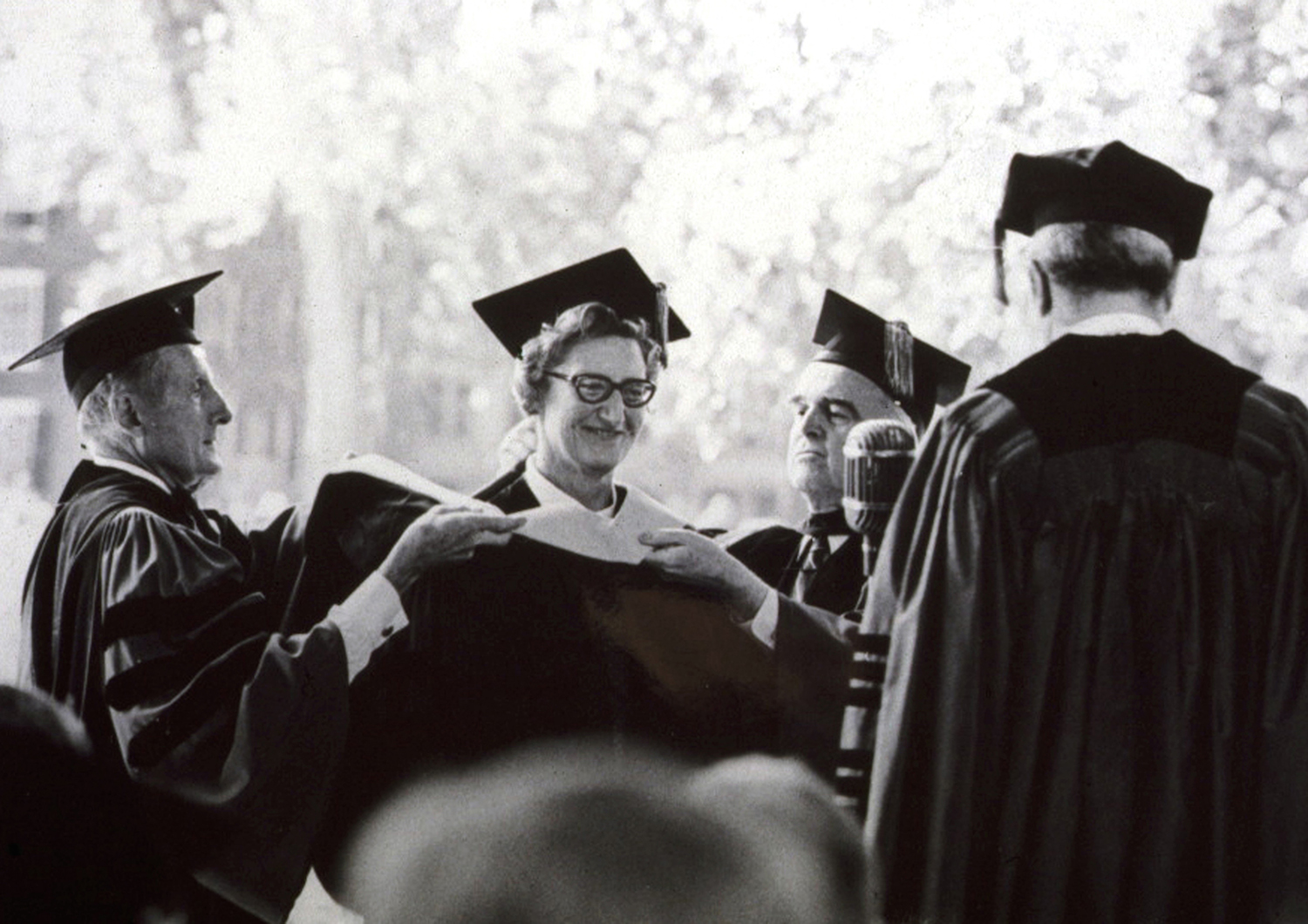
This first visit to America, and the impact of American energy and can-do spirit, made a dramatic difference to Cicely. She gave lectures to nursing and medical students at Yale organised by a wonderful woman, Florence Wald, then the dean of the Yale University Nursing School. After visiting St Christopher’s in 1968 Florence was inspired to start planning the first modern hospice in the United States in Newhaven, Connecticut. A by-product was that Dean Florence successfully nominated Cicely for an honorary DSc at Yale for the work she had been doing in the care of the terminally ill. This was a great occasion in 1969, which several members of our family attended.
How Was It All Done?
By a series of accidents, some happy, others painful, Cicely went on a logical path to where she found her vocation then did what she knew she was called to do. Her vision of what was wanted gradually changed and developed to become something highly practical and effective. She had the vision, she felt a calling, she got all the right training, and did crucial research on control of pain. She also experienced painful bereavement several times, that tested but never shook her faith.
I’ve met kings, prime ministers and movie stars – but I’ve never felt so honoured to interview anybody as this inspirational, glorious woman
Lynda Lee –Potter in the Daily Mail 26 February 2000
She created a wonderful team around her, long before the idea of St Christopher’s had even come together as a concept, let alone as a building. She developed a great talent for money raising, working through her own connections and our father’s connections in London. All this was combined with frequent articles and papers for publication from the Lancet to the Nursing Times, and even the popular press. She lectured to medical schools and elsewhere, and later on went to conferences all around the world, made frequent trips to America, giving lectures and interviews wherever she went. A big event in 1986 was the award of an Honorary Doctorate at Cambridge, and another at Oxford in the same year! To sum it up, she showed absolutely inflexible determination, developed a tremendous range of skills, and even became quite a good manager.
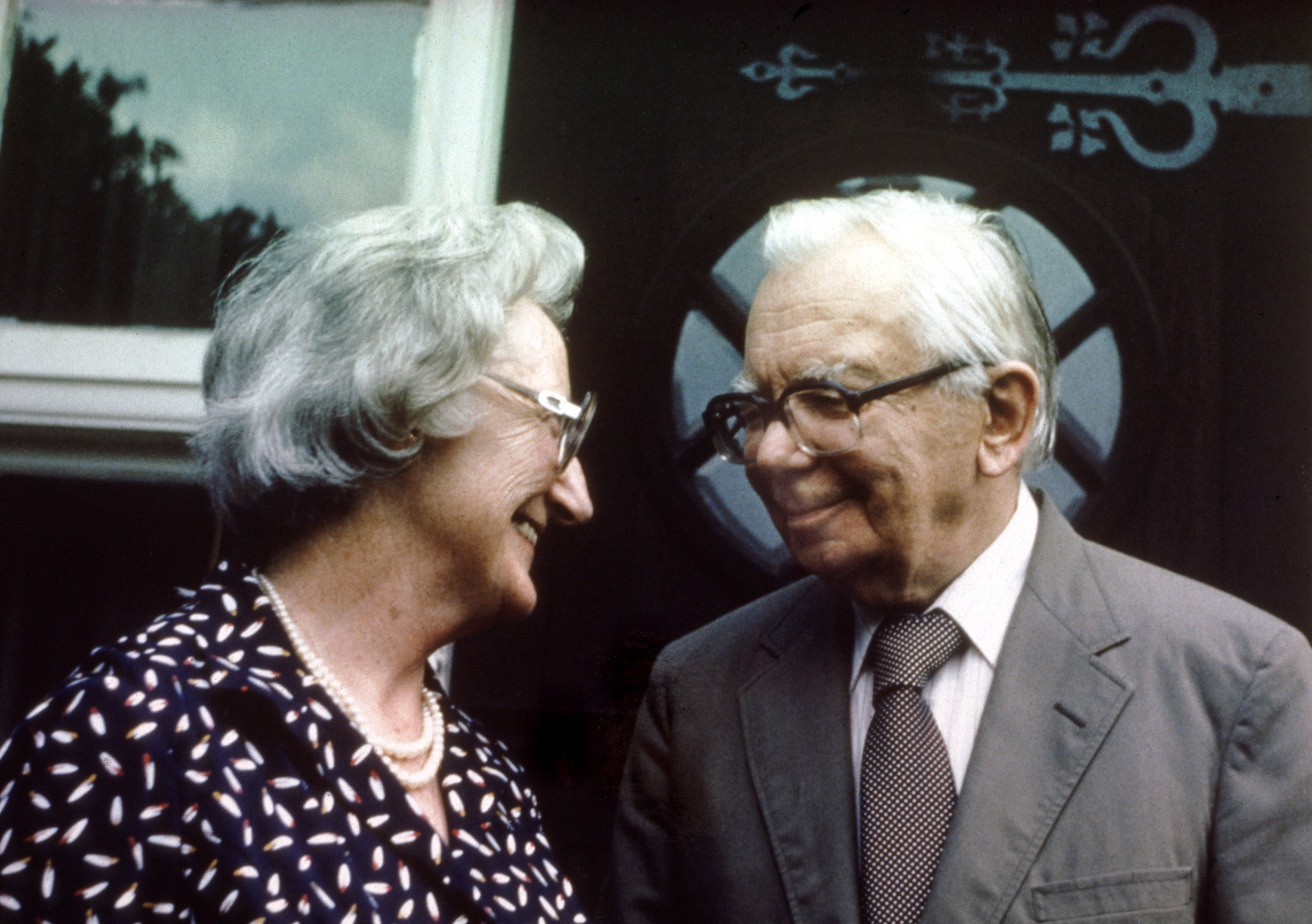
It was perhaps fortunate, although sad at the time, that she never married in her early days, therefore had no family responsibilities, and could concentrate on following her vision. Though she did fall desperately in love with a dying patient, but that’s another story. Fortunately, late in life, she met Professor Marian Bohusz-Szysko, originally from Poland, in London through his paintings in 1969. They fell in love and were married in 1989. It was an amazingly successful marriage, and I remember that they were really like teenage lovebirds – wonderful. At last Cicely had the love and stability she had longed for.
Going Forward
At St Christopher’s Hospice, Cicely engaged Dr Robert Twycross to start serious research very early in the 1970s. Research has continued there. In the 1990s Cicely saw there was so much to do that St Christopher’s could not provide all the research capacity, there was a gap to fill. She knew there are major charities and donors who prefer to provide grants for research, rather than ongoing care. So in 2000, at 10 Downing Street, thanks to Sir (now Lord) Richard Wilson, Cabinet Secretary, she launched the Cicely Saunders Foundation. It is now named Cicely Saunders International (CSI), to do and promote research into hospice care.
It’s Really Happening
Copyright photograph by Derek Bayes
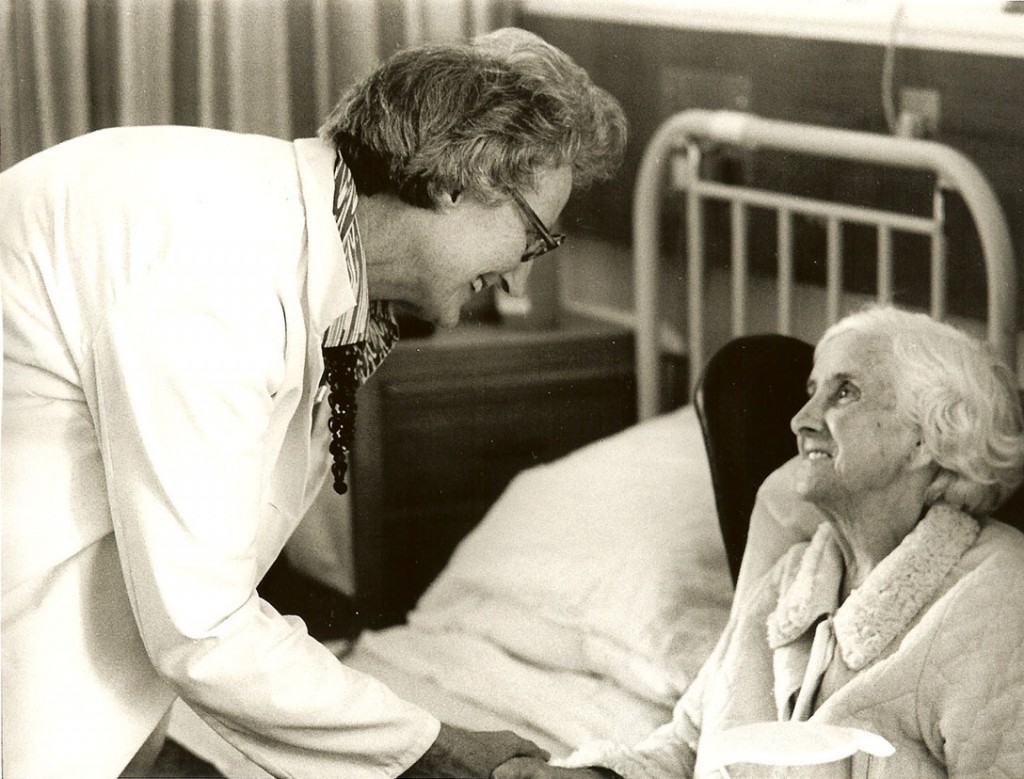
Most of this progress is due to a remarkable series of women, some of whom preceded Cicely, and others who joined in the work with her later on. They range from Dean Florence Wald of the Yale University Nursing School in Newhaven, Connecticut, USA, to Louie, one of Cicely’s favourite, very disabled and surprisingly long-lived patients at St Joseph’s , to Sister Zita Marie from Kansas City USA.
Now, fortunately for us, legions of such great people are working around the world. Not surprisingly perhaps, Cicely was affectionately called ‘Hurricane Cicely’ by the splendid Canadian doctor, Balfour Mount, who came to St Christopher’s Hospice to learn what Cicely was doing and how her hospice was doing it. He became one of the early pioneers inspired by Cicely. As Dr Balfour Mount recently said “The Hospice Movement has done something dramatic to medicine, in that it is putting the patients back at the centre of care, and regarding them as whole people.”